Warning: The magic method Math_Captcha::__wakeup() must have public visibility in /srv/www/vhosts/walter-seeholzer.ch/httpdocs/wp-content/plugins/wp-math-captcha/wp-math-captcha.php on line 87
Gojukai – Lotus Taiji

San-shu (Three Defenses)

The foundation for developing the qualities of Goju Ryu Karate practitioners lies in the fundamental katas Sanchin and Tensho.

These katas are intended to represent both hardness and softness. By practicing these fundamental katas, practitioners develop core strength, concentration, the balance between tension and relaxation, as well as the skills and benefits of strong abdominal breathing (Ibuki).

The founder of the International Karate Do Gojukai, Gogen Yamaguchi, compared Sanchin (三戦) to „three battles“ and taught that performing the Sanchin kata embodies the following:

The universe observes,

the earth observes,

you observe yourself.” (1)

He refers to the three dantiens:

  • the lower dantien is connected to the earth,
  • the middle dantien to humanity, and
  • the upper dantien to the universe.

It needs  a person to connect heaven and earth. The three battles indicate that different aspects are trained by connecting these three energy centers.

Saiko Shihan (Grandmaster) Goshi Yamaguchi enhanced the effectiveness of developing Goju Ryu Karate qualities with three new fundamental katas by introducing three protective patterns (2), which he called:

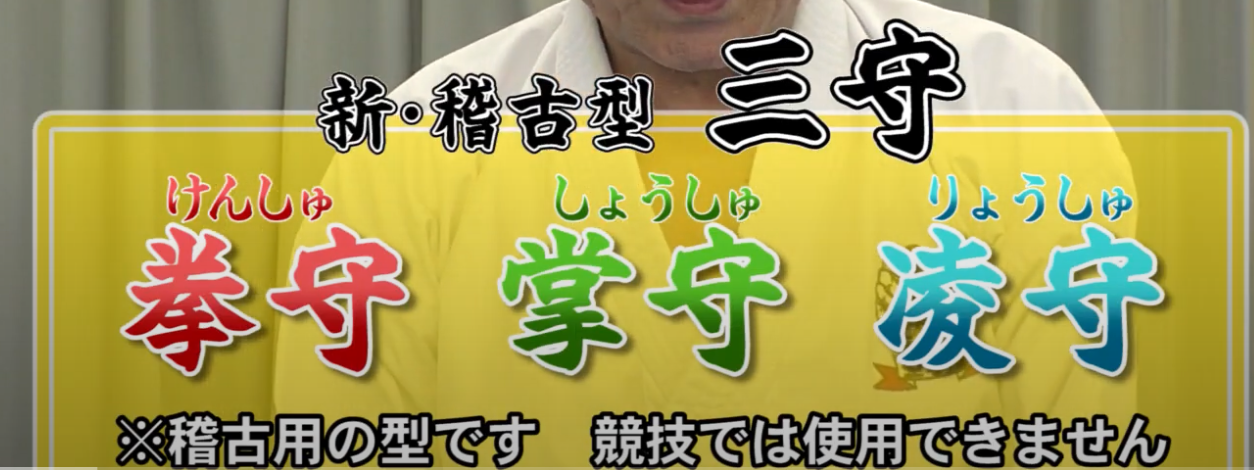
“San-shu” (Three Defenses):

Ken-shu (拳守, „Fist Defense“),

Sho-shu (掌守, „Palm Defense“),

Ryo-shu (凌守, „Superior/Transcendent Defense“) (3).

San-shu incorporates training that combines the opening and closing movements of Sanchin and Tensho. These movements are not performed in Sanchin Dachi but in

Han Zenkutsu Dachi and/or Moto Dachi.

In these three new katas, the focus is on „Hanyōin“ abdominal breathing (4) and rotational movements, thereby enhancing the practitioner’s core strength and concentration as circular force.

Ken-shu focuses on defense using the hips and elbows.

Sho-shu incorporates counterattacks emerging from defensive techniques.

Ryo-shu aims to unify attack and defense without separating them, striving for the integral combat skills of Goju Ryu Karate.

With the development of these three new katas, Saikoshihan Goshi Yamaguchi has once again demonstrated in my opinion his ability to compose movement patterns, which can only be compared to great musical composers.

(1) “You observe yourself” or “we observe ourselves.”

(2) 三つの守りの練習法 =  „Practice methods of the three protective techniques“

(3) 凌守 = „Superior, overcoming, transcending, ultimate“

The character Shinogu (しのぐ) means to endure and overcome difficulties and challenges.

Technically, this kata includes techniques in which defense and attack occur simultaneously. These are highly advanced techniques that can, however, be mastered with patience and practice.

(4) Han (半): means „half“ or „partial.“

Yōin (要因): means „factor“ or „cause.“

Kokyū (呼吸): means „breathing.“

In this context, „Han-yōin kokyū“ could be translated as „partially causal breathing“ or „semi-causal breathing.“

February 2025 / Walter Seeholzer

Foundation:

Material from videos and informations from a correspondence with Saikoshihan Goshi Yamaguchi.

Video Links:

Ken-Shu: https://youtu.be/4iiqAQfi3p0?si=p19She2DY4XVZs0H

Sho-Shu: https://youtu.be/wmruUPKyxhc?si=z4QnaI5H3KG5WRIg

Ryo-Shu: https://youtu.be/52MZo8R6asA?si=LbCdAWtsmI-QxV9M


Bericht in Deutsch:

San-Shu (Drei Verteidigungen)

Die Grundlage für die Entwicklung der Qualitäten von Goju Ryu Karate-Praktizierenden liegt in den grundlegenden Kata Sanchin und Tensho.

Diese Katas sollen sowohl Härte als auch Weichheit repräsentieren. Durch das Üben dieser grundlegenden Katas entwickeln die Praktizierenden Kernkraft, Konzentration, das Gleichgewicht zwischen Spannung und Entspannung sowie die Fähigkeiten und Vorteile einer starken Bauchatmung (Ibuki).

Der Begründer des International Karate Do Gojukai, Gogen Yamaguchi, verglich Sanchin 三戦, mit, „drei Kämpfe“ und lehrte, dass die Ausführung der Sanchin Kata Folgendes verkörpert:

  • Das Universum beobachtet,
  • die Erde beobachtet,
  • du beobachtest dich selbst.“ (1)

Da bezieht er sich auf die drei Dantiens, der untere Dantien ist mit der Erde verbunden, der mittlere Dantien mit der Menschheit und der obere Dantien mit dem Universum. Es braucht den Menschen, um Himmel und Erde zu verbinden. Die drei Kämpfe zeigen, dass es unterschiedliche Aspekte sind, die wir mit dem Verbinden der drei Energiezentren schulen.

Saiko Shihan (Großmeister) Goshi Yamaguchi verstärkte die Effektivität der Entwicklung von Goju Ryu Karate Qualitäten mit den drei neuen Grundlagen Kata, indem er drei Schutzmuster (2) einführte, die er

San-shu (Drei Verteidigungen) nannte:

Ken-shu (拳守, „Faustverteidigung“),

Sho-shu (掌守, „Handflächenverteidigung“),

Ryo-shu (凌守, „Überlegene/Transzendente Verteidigung“ (3).

San-shu beinhaltet ein Training, das die Öffnungs- und Schließbewegungen von Sanchin und Tensho kombiniert. Diese Bewegungen werden nicht in  Sanchin Dachi sondern in  Hanzenkutsu Dachi und/oder  Moto Dachi ausgeführt.

Bei diesen drei neuen Kata liegt der Fokus auf der „Hanyōin“ -Bauchatmung (4) und Rotationsbewegungen, wodurch die Kernkraft und Konzentration des Praktizierenden als kreisförmige Kraft verstärkt werden.

Ken-shu konzentriert sich auf die Verteidigung unter Einsatz der Hüften und Ellenbogen.

Sho-shu beinhaltet Gegenangriffe, die aus Verteidigungstechniken hervorgehen.

Ryo-shu zielt darauf ab, Angriff und Verteidigung zu vereinen, ohne sie voneinander zu trennen, und strebt nach den integralen Kampffähigkeiten des Goju Ryu Karate.

Mit dem Entwickeln der drei neuen Katas, hat Saikoshihan Goshi Yamaguchi einmal mehr bewiesen, dass er eine Fähigkeit zum Komponieren von Bewegungsmustern entwickelt hat, die nur mit den großen Musik Komponisten zu vergleichen ist.

(1) “Du beobachtest dich selbst” oder “Wir beobachten uns selbst.”

(2) 三つの守りの練習法 = „Übungsmethoden der drei Schutztechniken“ (protective patterns)

(3) 凌守 = „Überlegen, überwindend, transzendent, ultimativ“ (superior, overcoming, transcending, ultimate)

Das Schriftzeichen Shinogu (しのぐ) bedeutet, Schwierigkeiten und Herausforderungen zu ertragen und zu überwinden.

Technisch gesehen beinhaltet diese Kata Techniken, bei denen Verteidigung und Angriff gleichzeitig erfolgen. Es handelt sich um hochentwickelte Techniken, die jedoch mit Geduld und Übung gemeistert werden können.

(4) Han (半): bedeutet “halb” oder “teilweise”.

Yōin (要因): bedeutet “Faktor” oder “Ursache”.

Kokyū (呼吸): bedeutet “Atmung”.

In diesem Zusammenhang könnte “Han-yōin kokyū” als “teilweise ursächliche Atmung” oder “halb ursächliche Atmung” übersetzt werden.

Februar 2025 / Walter Seeholzer

Grundlagen:

Material aus den Videos und Informationen aus einem Briefwechsel mit Saikoshihan Goshi Yamaguchi.

Video-Links:

Ken-Shu:  https://youtu.be/4iiqAQfi3p0?si=p19She2DY4XVZs0H
Sho-Shu: https://youtu.be/wmruUPKyxhc?si=z4QnaI5H3KG5WRIg

Ryo- Shu: https://youtu.be/52MZo8R6asA?si=LbCdAWtsmI-QxV9M

Internal aspects of traditional Karate Do

Many of my friends in Gojukai Karate Do wondered why I left the Karate Do, in order  to further study  the internal art of Taiji. I worked, as many of my friends know, for four decades within the Gojukai Organization and I was  graded years ago as a Shihan Kyoshi 7 th. Dan within the International Karate Do Gojukai Association. 

Also, since almost three decades, I have been researching the roots of Gojukai Karate Do and in consequence, I started to study about chinese martial arts; for almost one decade I have been fully engaged in  Taiji Training and stopped to do my Karate Do training. 

 Even though I don’t regularly practice Karate anymore, my aim is to share some of my results and conclusions, after a long time of researching the internal aspects in martial arts. 

I had to research many years to get to those results, which I will  present now in this essay. 

Open and Close 

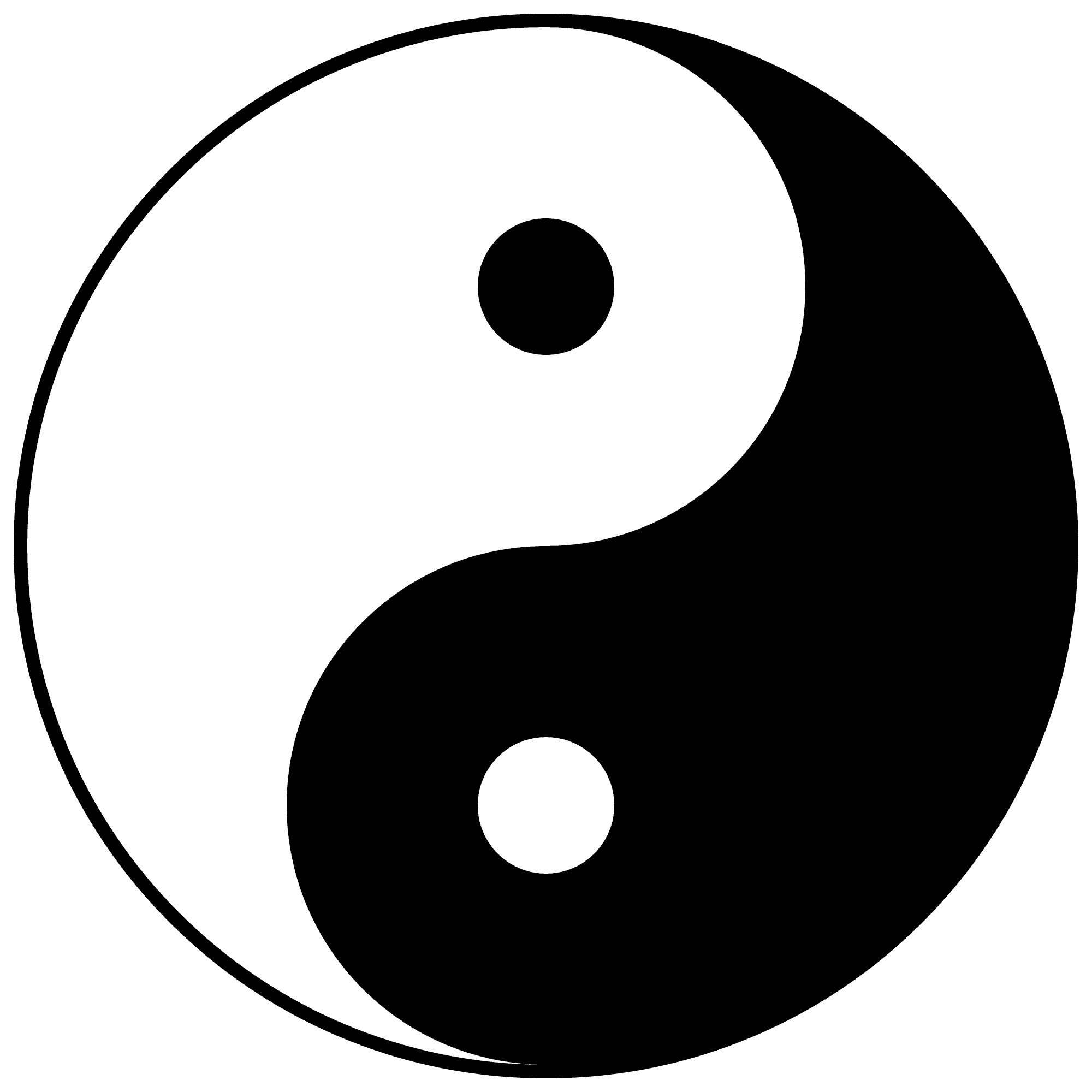
To open and close a movement is an almost lost treasure of  karate-do. In order to explain it in detail, I have to start with a well known symbol, because it includes more, than you can say with words and I have to ask you to keep the Yin/Yang Symbol in mind and to guide your intention and awareness towards the understanding and the meaning of it, even then, if you think, you might have already understood it, to some degree.

The Yin/Yang Symbol is the base of the nature as well as it expresses a contrastive relationship that obtains between two or more things and therefore also about the function of a movement in Karate Do or other moving arts.
There is no „Yin“ (Ju) without „Yang“ (Go), there is no „Yang“ (Go) without „Yin“ (Ju), „Yin“ (Ju) and „Yang“ (Go) are smoothly exchanged in each motion. Interesting is to see, that the Japanese Karate Do starts with „Go“ followed by „Ju“. In China, the „Yin“ (Ju) is mentioned always before „Yang“ (Go). That is maybe also a hint, what is more emphasized… “Yin“ is the receptive (dark)  and „Yang“ (bright)  the active principle


 Just like the development of the everlasting universe, in which we find the harmony of „Go“ (positive) and „Ju“ (negative), the way of Goju School Karate Do should be a development of the splendid harmony of free endless Martial Arts and elegant spirit“ 
 Gogen Yamaguchi Kaisso                                                    


Before I’m able to give you some of the above-mentioned traditional details, you have to be sure that the following information about reverse breathing is well understood.

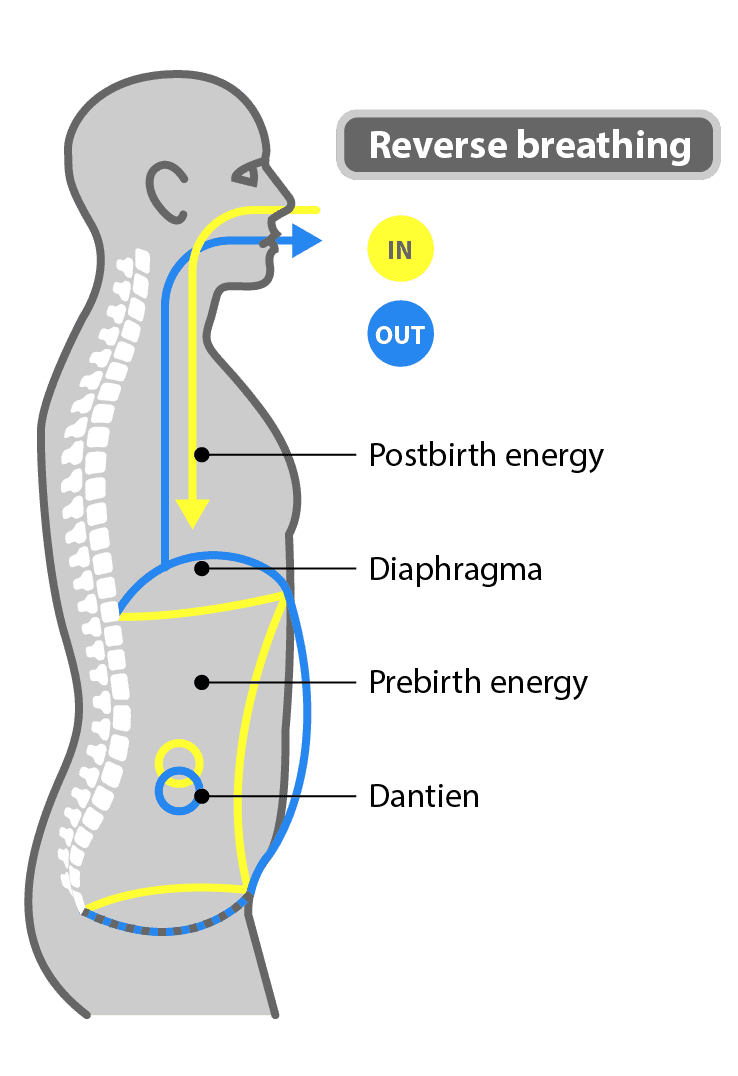
Reverse breathing

First of all, we have to learn about the reverse breathing. In Karate it is essential to learn it. Maybe you know it already, but I would like to ask you, to be 100% sure, that you really understand it and that you can apply it in motion, otherwise you miss the whole point. 

Don’t expect a sudden change, it is a process to get used to it. At first, it seems like it needs strength to compress and lift the Dantien, when you breath inn, but this is just because we are not used to breathe like this. After a while, it will be a normal way to breathe and you will be able to switch from normal to reverse breathing instantly. 

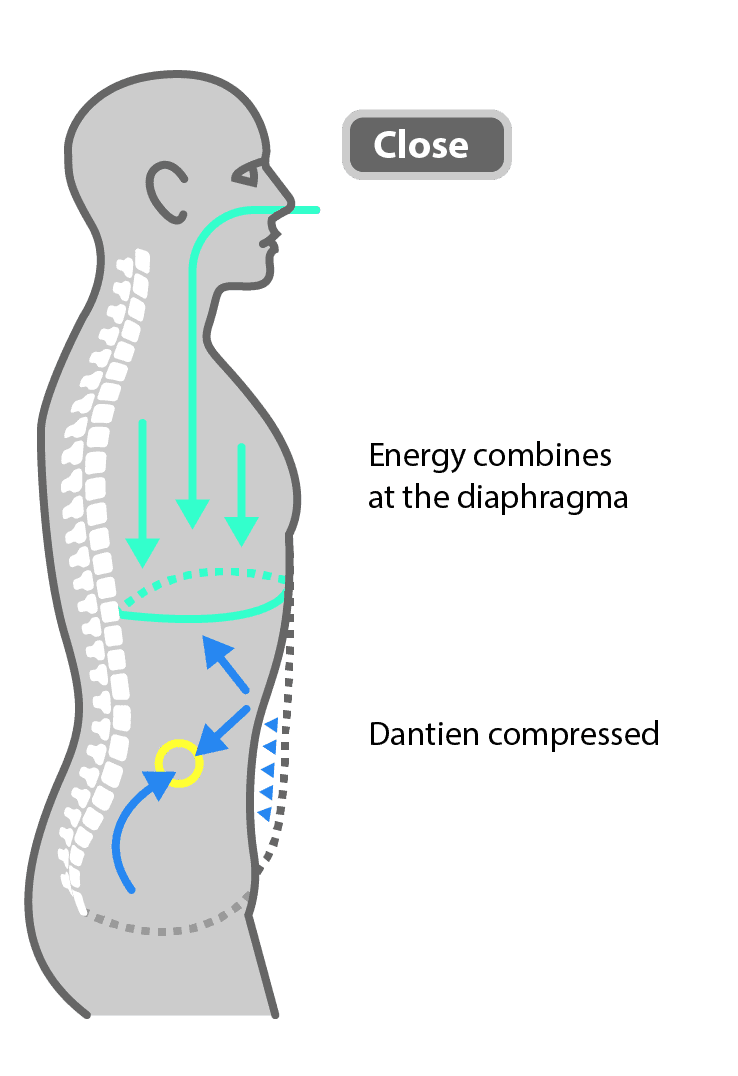
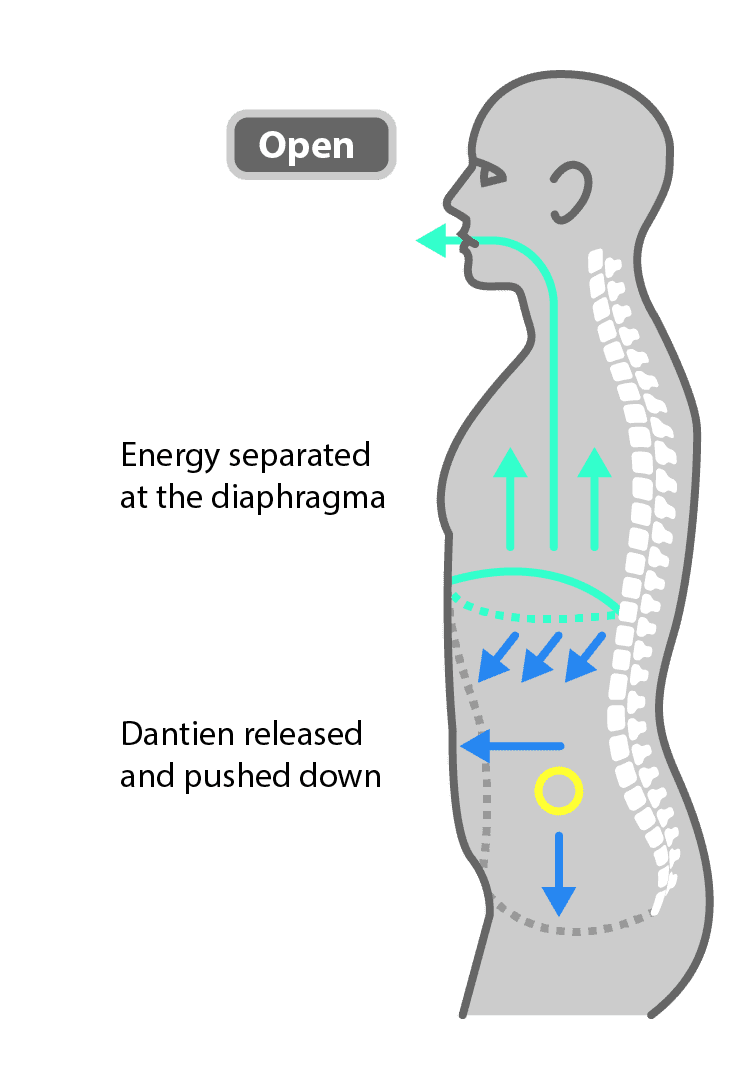
Please also refer to the below drawing. 


Breathe in: 

  • You lift up the energy from the ground and from the perineum slightly.
  • You lift up the dantien slightly
  • You pull in the abdomen
  • You round the lower back, by compressing the abdomen backwards to the Mingmen point, which is located on the spine, opposite the navel. (in between L2 / L3)
  • While breathing inn, the energy of the abdomen (prebirth Chi) combines, with the oxygen (postbirth chi), which you breath in at the diaphragm. 

Breathe out: 

  • You release the compressed abdomen.
  • You lower the diaphragm
  • Your abdomen is releasing to the normal position.
  • The dantien is pressed downwards. (it depends in what situation. You can just release it, when you do soft breathing exercises, but you push it downwards, when you do for instance a strike and a kiai)
  • The sudden lowering of the dantien sends the energy to the sole of the feet and bounce back to the dantien and the opening channels.

Be careful, that you don’t use too much strength. After regular practice, it will be an almost natural way to breathe. The intention to do it, will be enough to start to breathe like this

Once you are familiar with the reverse breathing, you can start to connect this breathing to the closing and opening of each movement. 

Basically, you can say, that everybody does to a certain degree the opening and closing (because the positions in Goju Ryu Karate Do are made for it), but without a conscious training and step by step learning, you will not fully understand the value of it.

In the past, the Sanchin Danchi showed, how the closing and opening is done.  Today in modern Karate, the Sanchin Dachi is done mostly in such a way, that it looks strong from the outside.

But in Sanchin Dach,  you have two opposite functions, close and open, only a few karate masters understand  the deeper meaning of it. 

Traditional karate training could bring back these bits of informations into the current karate practices. The generated power of a correct opening and closing is using internal forces (pressures) rather than muscles strength.

You close the movement, when you breathe in, and you open the movement, when you breathe out. 


Now you can connect the breathing to the internal closing and opening,

Most important will be, that you start the closing and the opening with the Dantien area. It means, that you pull with the movement of the Dantien the whole body through the elastic chi tissue, which will be formed more and more, when you do it with you consiousness. 

In details, the closing is done, by pulling your connectiv tissues, such as 

  • the faszias, but also
  • the tendons and
  • the muscles,
  • the Yin Meridians as well as
  • the chi tissues

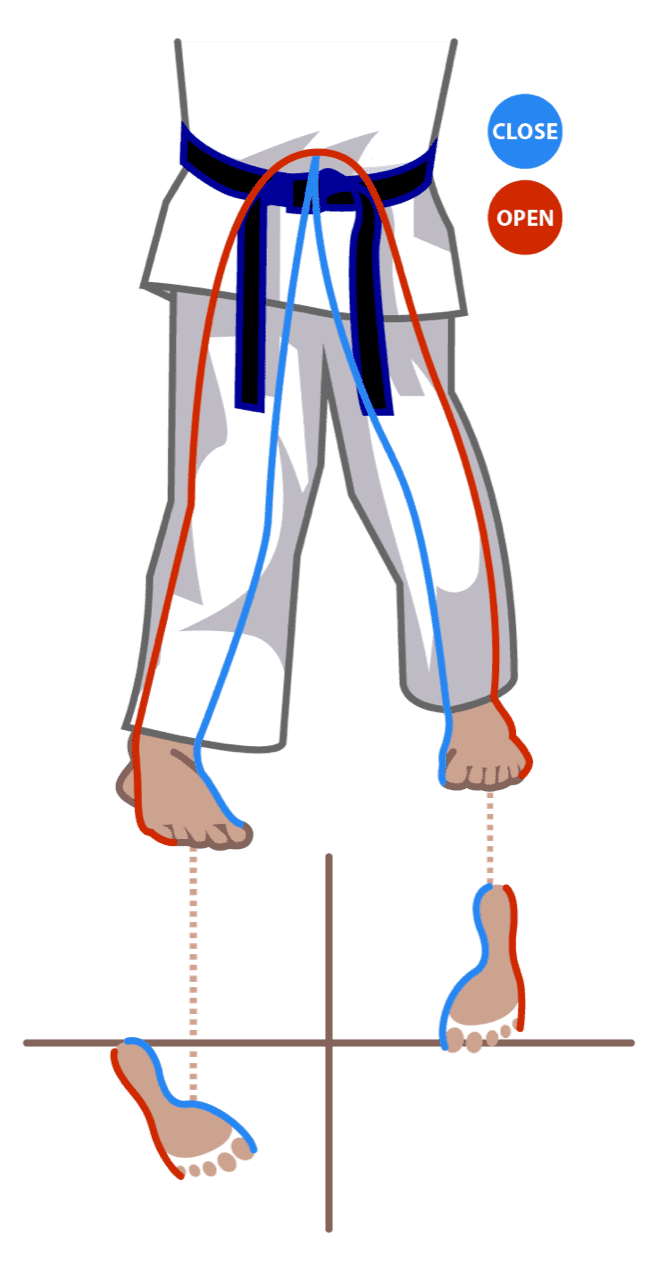
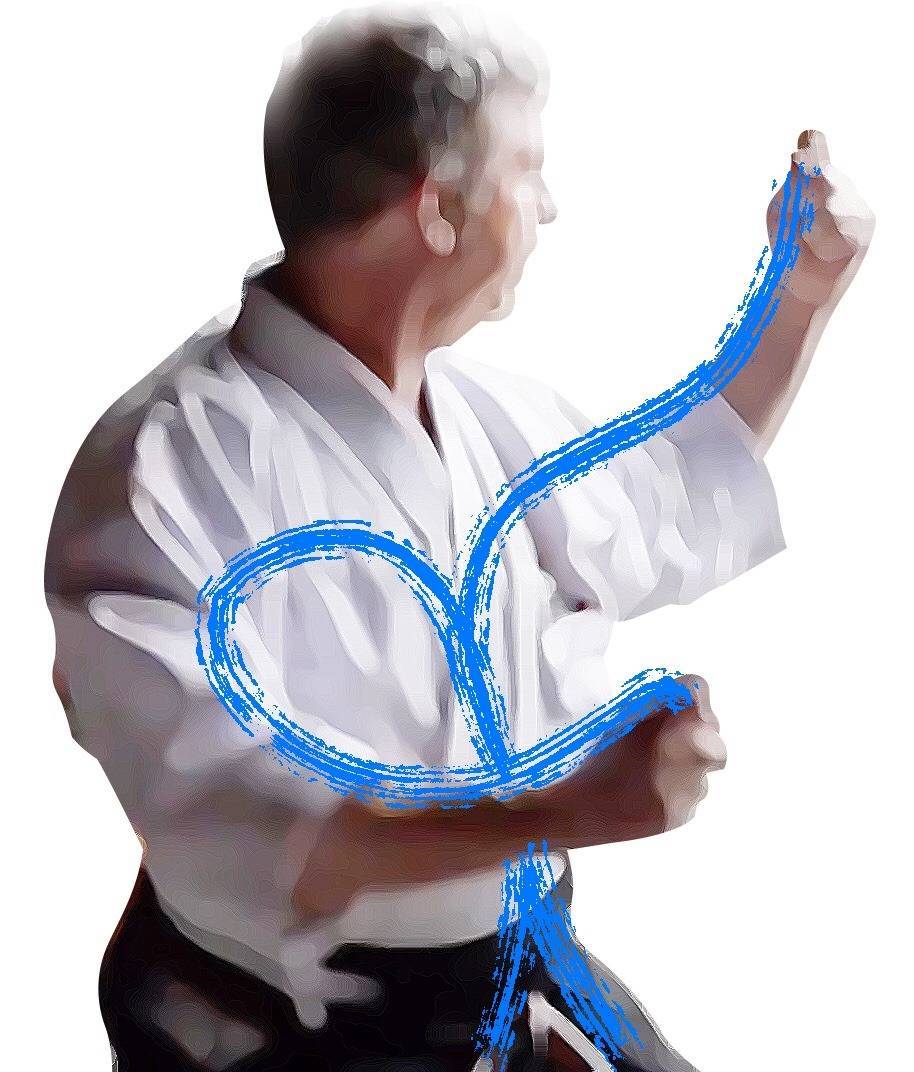
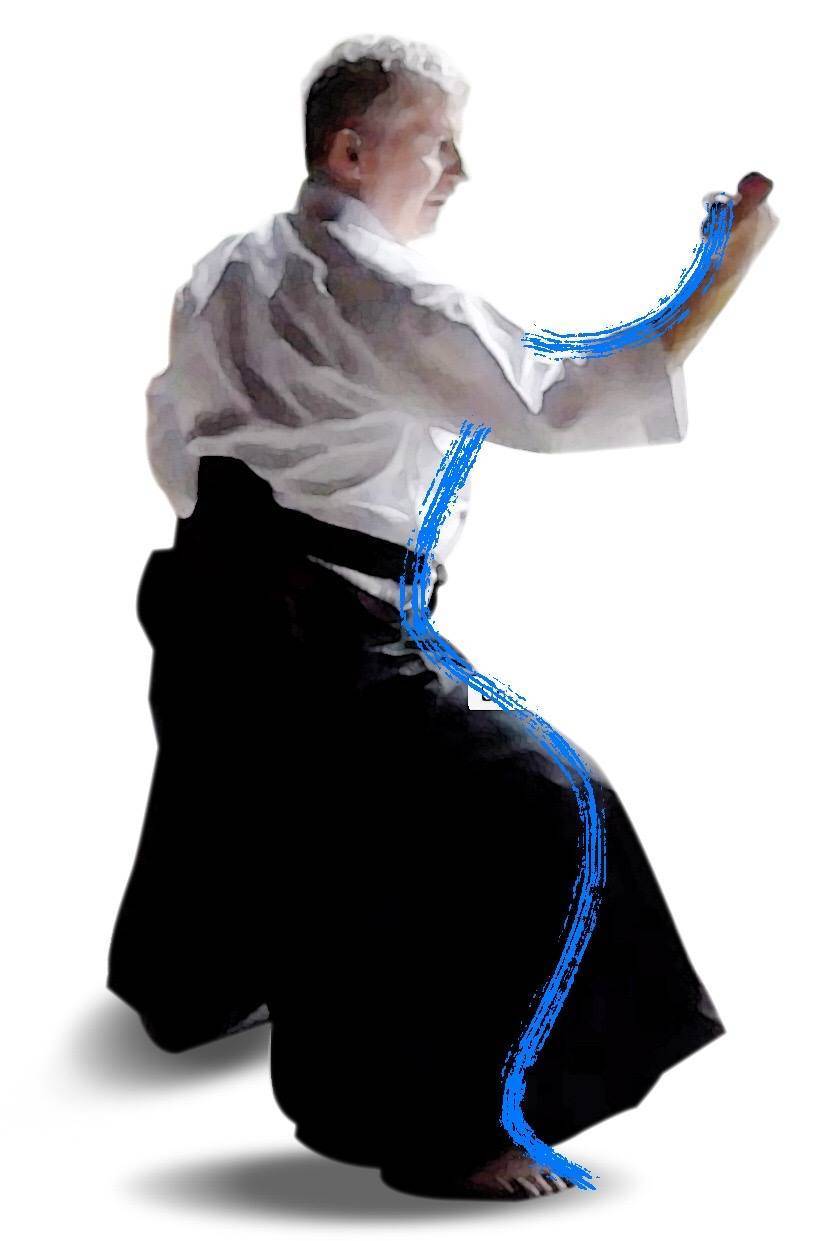
towards the dantien, which is slightly lifted up. The channel for the closing starts at the big toe and ends at the thumb. The channels for closing are mainly in front of the body.

You have 3 Bows to use, the arms, the legs, and the spine.

  • The bow controlling the feet are connected at the base chakra (Perineum),
  • The bow of the arms are connected at the chakra of the chest. (heart chakra)
  • The bow  controlling the spine is connected to the mingmen point/Dantien.
  • Big toe
  •  inside the leg 
  • perineum
  • lower dantien
  • chest
  • inside the arms
  • thumb. 

While you breathe in, you pull the whole connective tissue from the big toe to the thumb towards the dantien, as you would wear a suit and as you could suck in energy to the Dantien. At the time, when you breath in and lift the dantien slightly and try to make the lower back flexible through the mingmen point. The whole suit reacts at the same time. (at first, you have to visualize it, later the breathing will more and more pull on the suit)

Important fact: try to feel your body as a mass of elastic tissue, rather than a solid body with bones and muscles.


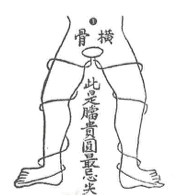
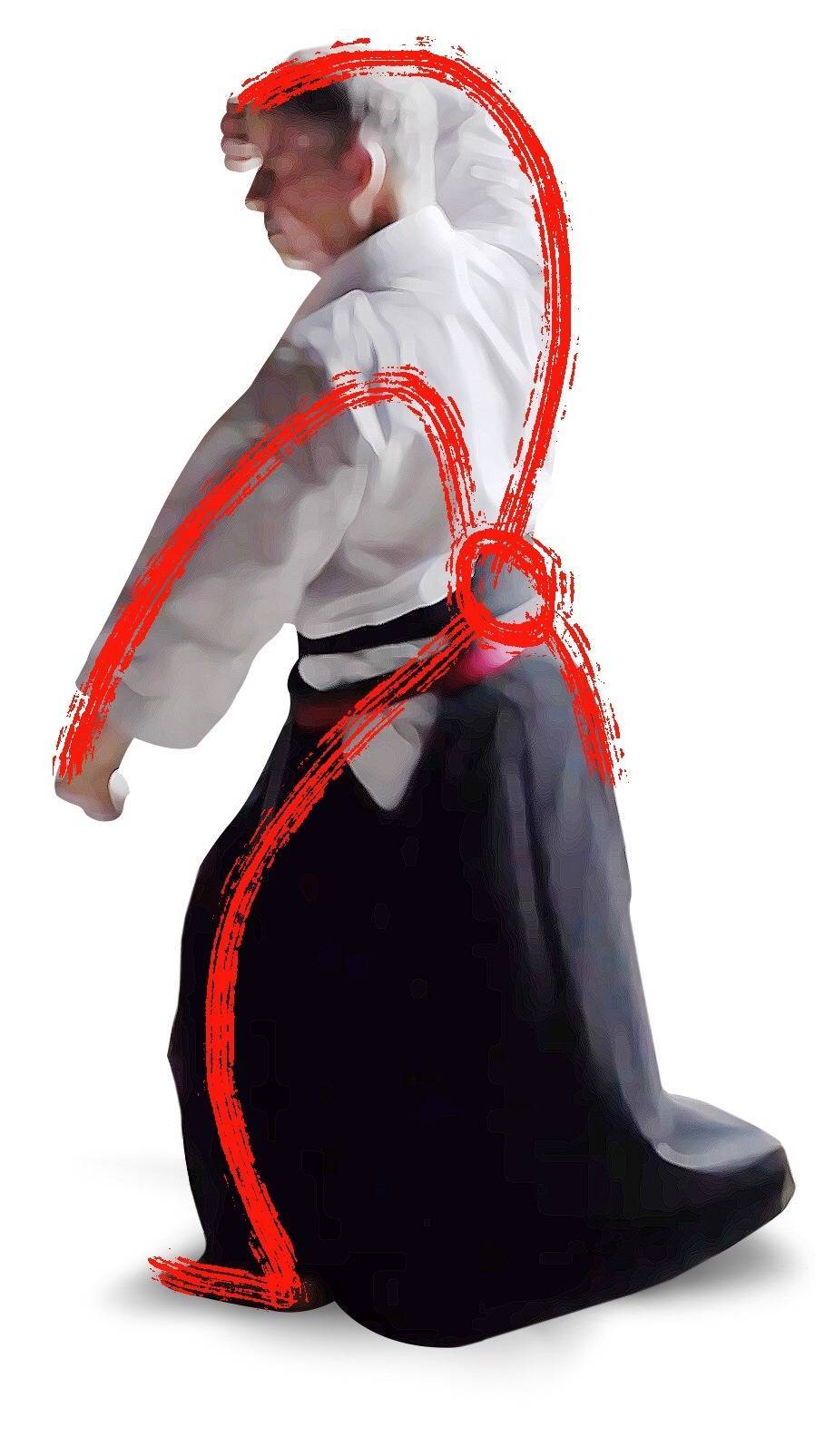
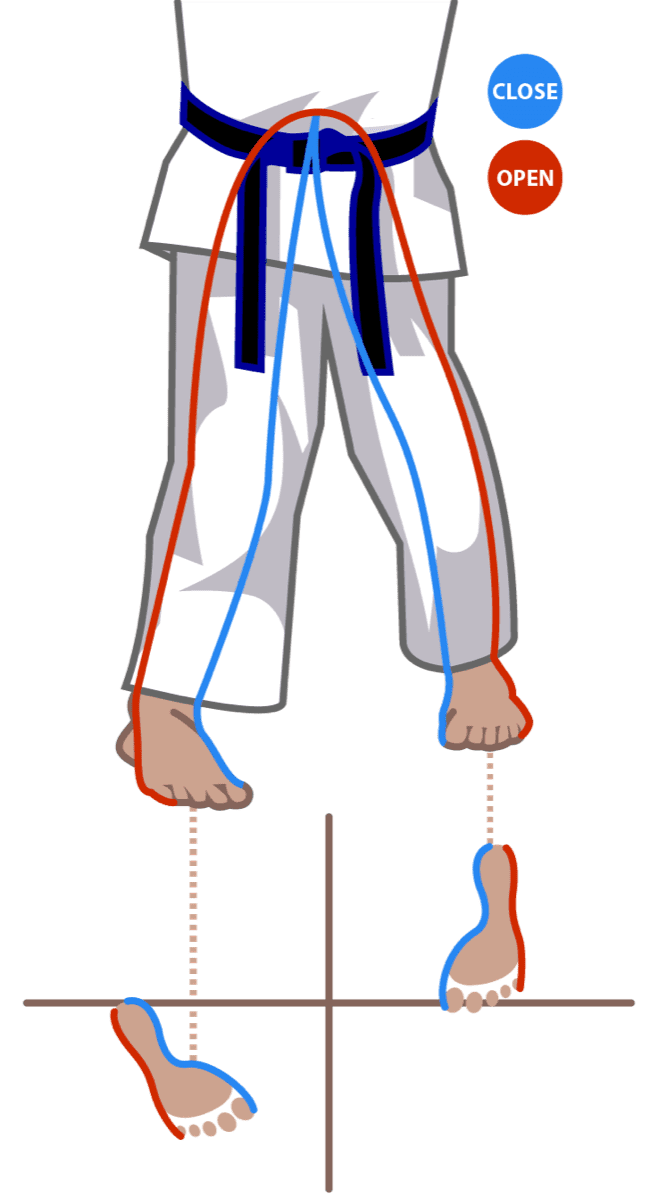
On the pictures, the closing and opening are shown as inside (close) – outside (open)  force, but by using the closing/opening correctly,  the energy is a spiraling force as you see on this traditional drawing.

After having closed the movement correctly, you have to shift the awareness to the Yang Channels as described below. While you breathe out, you shift internally the intention to the connection of the little toe to the little finger. Before you really open the whole Channel, your intention goes from the Dantien to the sole of the feet, from where the force, due to the pushing down of the dantien, is rebounced back to the Dantien and from there to the opening channels, which are connected on the back as well as outside the legs.

  • Little toe
  • outside the legs
  • perineum
  • dantien
  • lower back
  • point between the shoulder blades
  • outside the arms
  • little fingers.
                                                                                                                                                                                 From „Go“ to „Ju“ or from „Ju“ to „Go“ there should be freedom and ease of change in movement.    
 Gogen Yamaguchi, Kaisso

At the beginning, to work in such a way seems very complicate, but after a while you will feel it as very simple, after being used to the new way of breathing and when you can apply the understanding of how you activate the closing and opening channels.

In order to learn the new way, you must switch the intention and the awareness to the breathing and the closing and opening channels and not simply repeat motions.

Like that, the quality of the motion will be changed. Each motion must follow that process of closing and opening. If you don’t do it, of course you can still do fast and powerful technics, but those technics will always rely on the power of your muscles and the motion will not be as smooth as when you do the closing and the opening.

In older age, it’s more and more difficult to use the muscles in the way, as you can do it, when you are young. With the closing/opening, you can do smooth and powerful motions, also when you get older….

Sanchin Kata and Tensho Kata are the tools to learn it.

Don’t rush, because it is a completely different movement from what you probably do now.

The first step is to be sure of the reverse breathing, then you can shift the awareness to the body suit – the channels to close and open, then you connect the Yin and Yang, as you see it on the Taiji Symbol, there is a constant change, without interruption!
Each opening will have a closing within and each closing will have an opening within.

The change of power is generated just with the Dantien, but the forces are transmitted with the expansion of the whole-body suit.

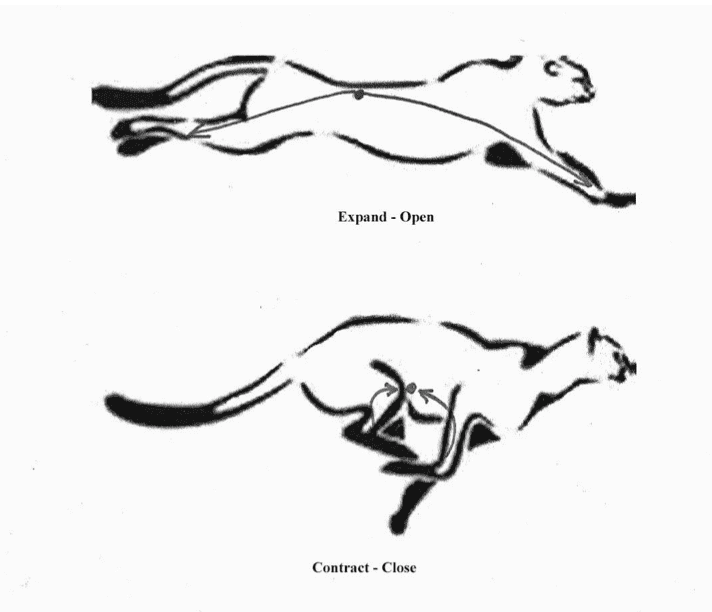
What it means to work with forces, rather than working with muscles, you can clearly see on animals. There movements seems to be so easy and effortless. This has mainly to do, because they work with the forces, they contract by closing and expand with the opening the whole elastic body suit.

There are many more aspects of a harmonized motion, but those aspects, like the state of mind, the mind intention, the awareness or the internal energy, are subjects to other articles….

Questions / Seminars:

© Walter Seeholzer / www.walter-seeholzer.ch / walter.seeholzer@icloud.com

Photos:

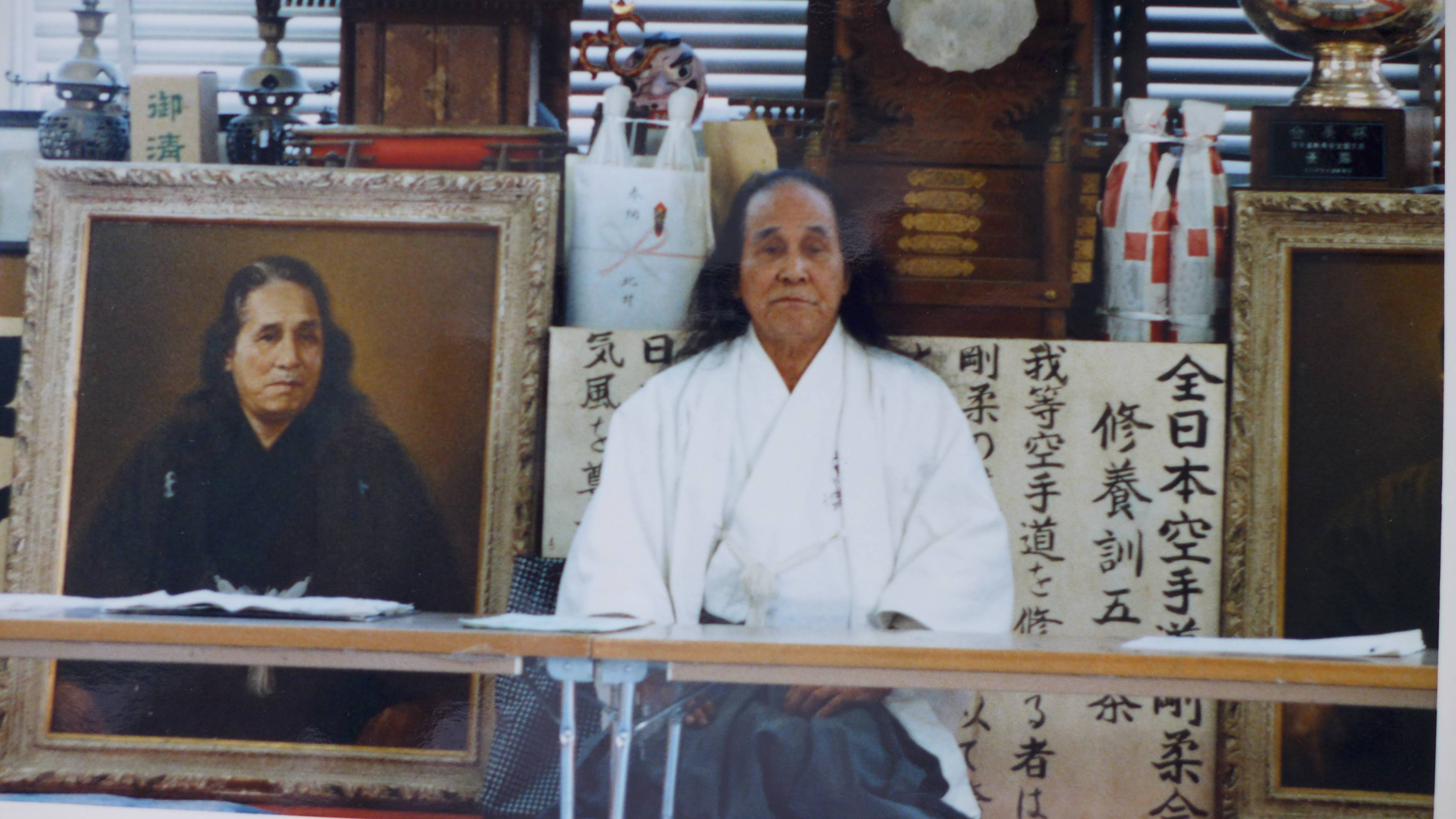
  • Yamaguchi Gogen, Kaisso by Walter Seeholzer
  • Walter Seeholzer, Kyoshi Shihan

Illustrations:

  • per instructions of the autor ©

References and Illustration of the leopard: •

  • Mike Sigman, Colorado